Detroit’s Veteran Builders Pass Down Lessons That Cost Them.
By: Michael D Gutierrez
Photography: Brayan Gutierrez
June 11, 2026
Jason Jones thought the house he was buying needed about $25,000 in repairs. His contractor had looked at it for five minutes and said the number was solid, so Jones closed on the purchase. Then the same contractor spent two hours writing up the actual work and handed him a bill for $75,000. Jones told this story as a warning during a panel held by the Real Estate Association of Developers in partnership with DFO313. “Do not close on that house if you have not signed a construction contract,” he said.
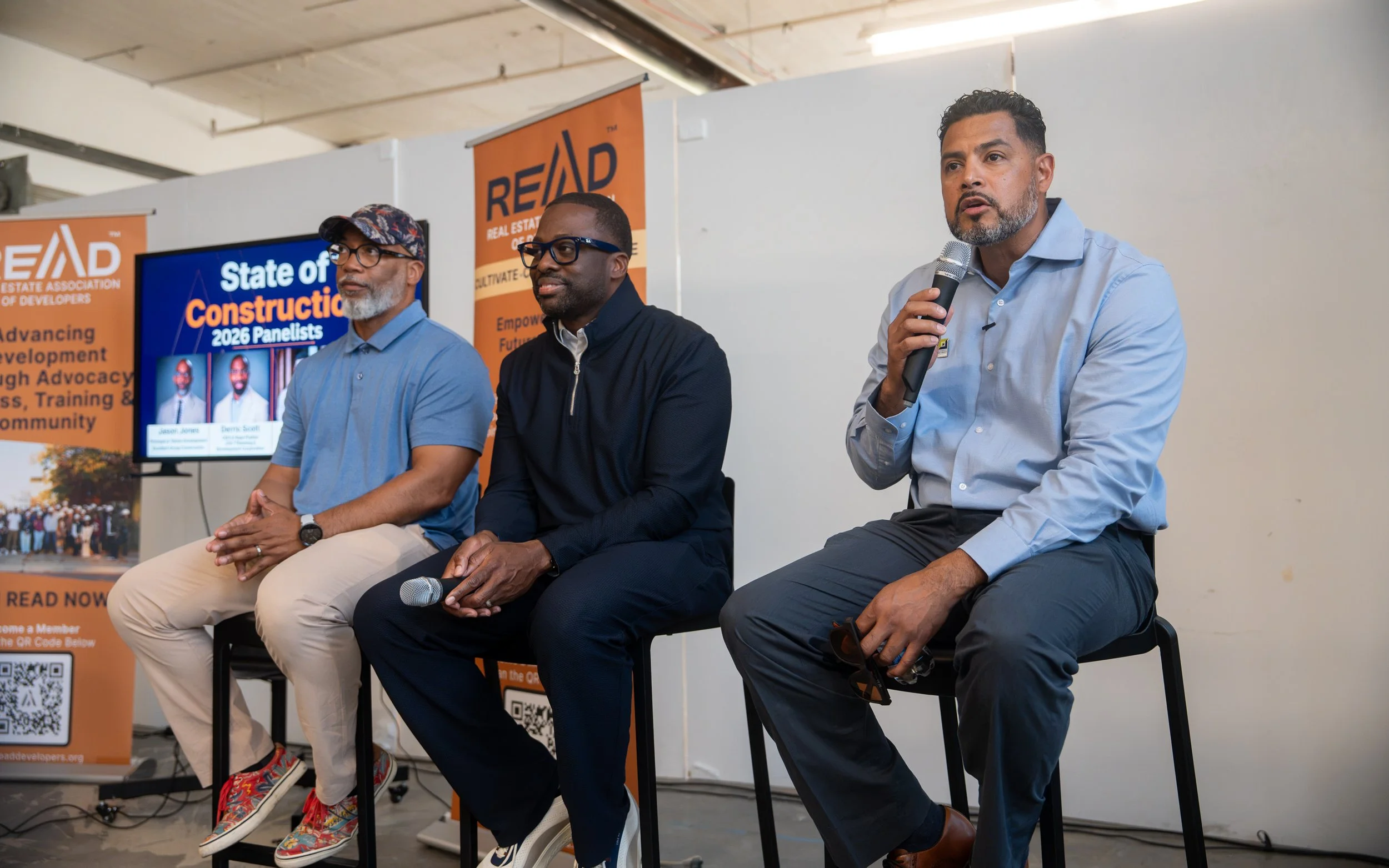
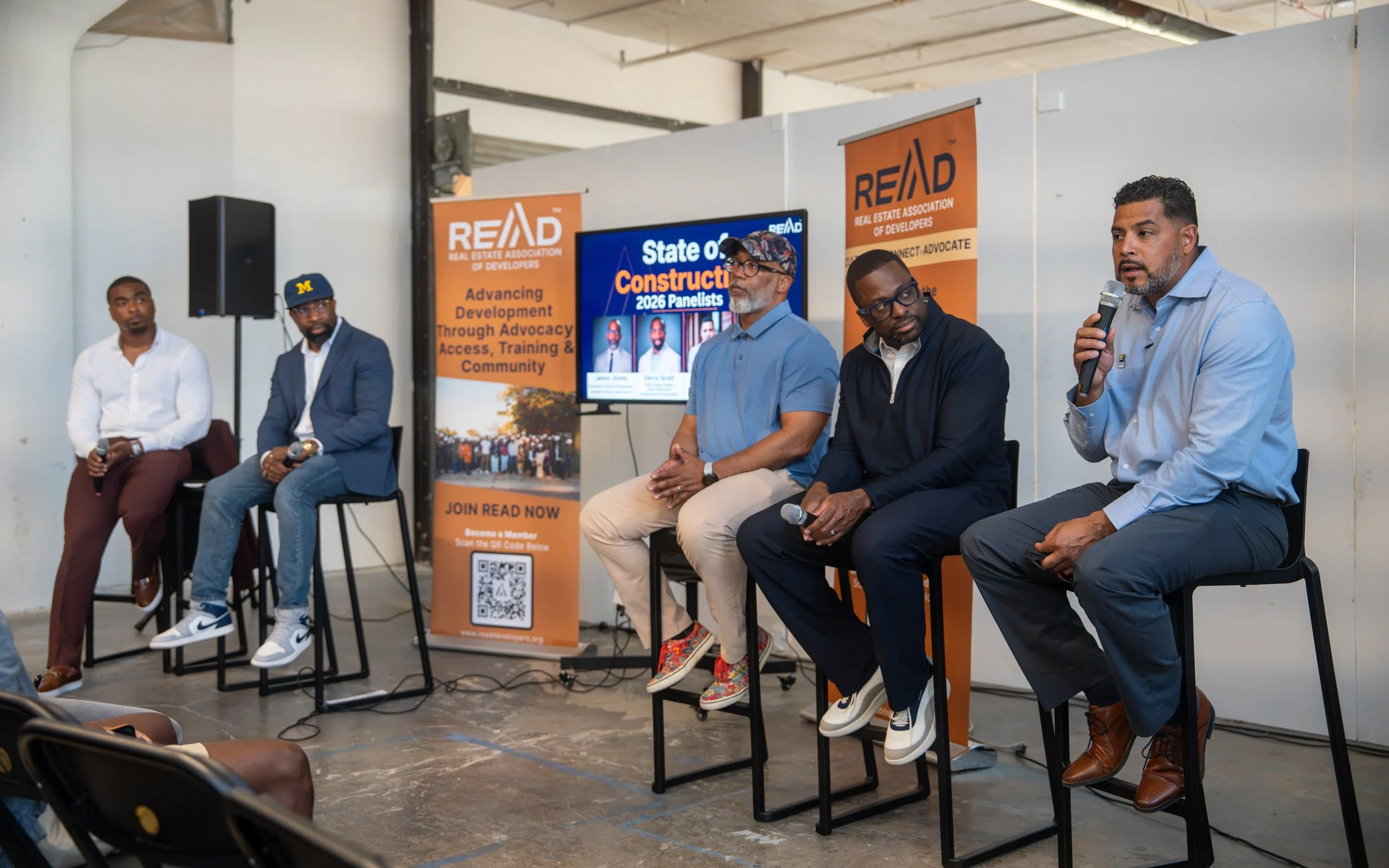
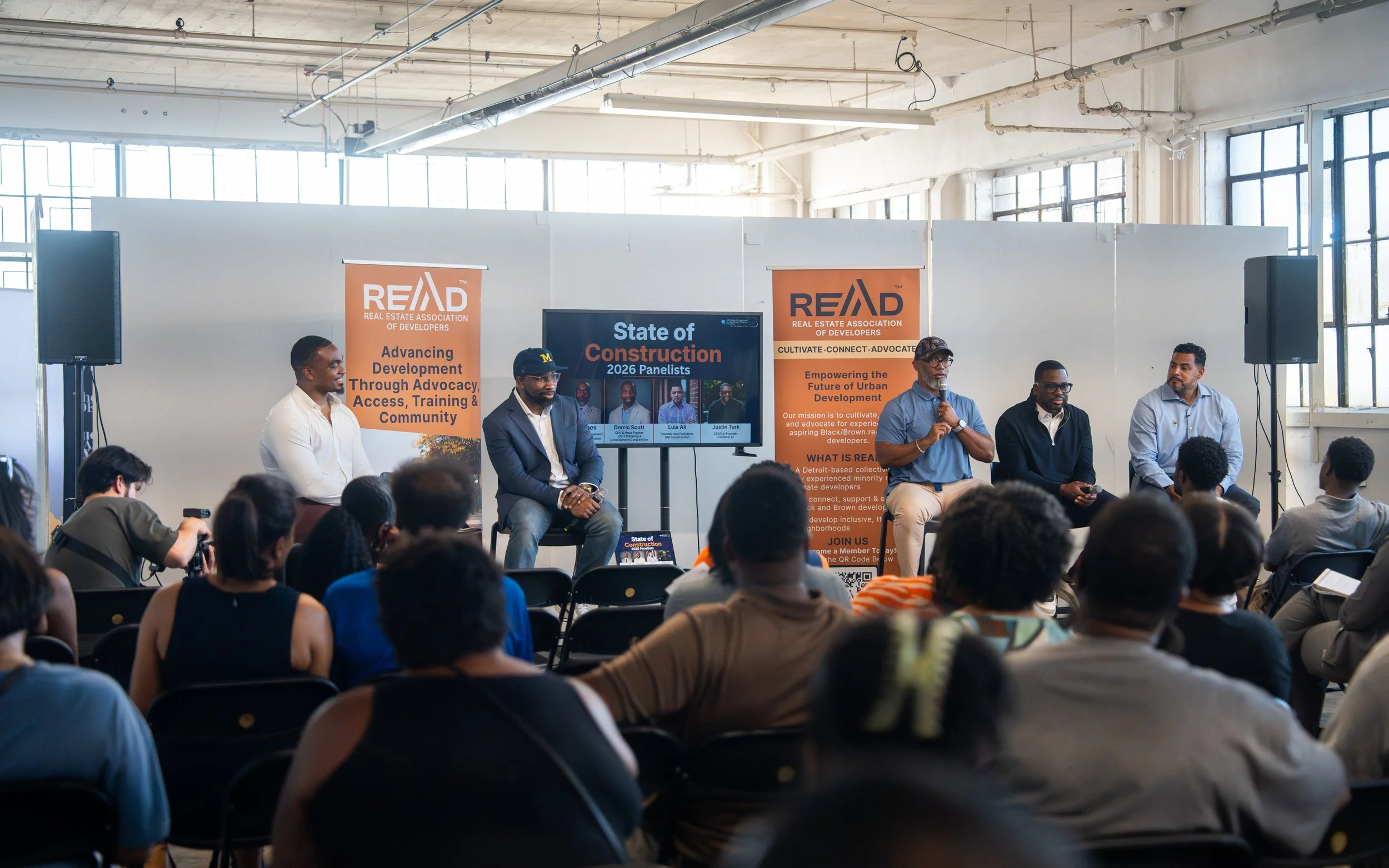
Jones helped found READ, the Real Estate Association of Developers, a mostly Black group of Detroit developers and contractors. He was one of four speakers on a panel titled “State of Construction: Where Development Meets Execution” that READ held in partnership with DFO313 on Thursday, June 11th, at The Edit on East Grand Boulevard in Detroit. Matthew Boyd, director of acquisitions at Kipling Development, moderated. Luis Ali of AGI Construction said DFO313, which was founded by his wife Tanya Saldivar-Ali, works with local contractors to build their skills so Black and Brown builders get a share of the work as the city is rebuilt.
The panelists did not downplay how hard it is for a contractor of color to break in. “There’s been a learning curve, and I don’t think anybody’s really been handing out those instructions properly,” Ali said. What the panel offered in response was not a promise that the barriers would fall, but a list of things a builder can control. Ali drew the first line himself, saying “There is no one looking out for your best interest but yourself,” he said.
That list started with knowing what a project should cost. Derric Scott, a developer and trained architect who runs the firm J29:7, told the room to set a budget first and design the project to fit it, instead of letting an architect and a contractor name a number and treating that as the budget. He urged the audience to gather several real bids and compare them against one another rather than collecting a price here and a price there.
But those numbers only hold up once the deal is in writing. The contract Jones wished he had signed before buying that house was the same protection Ali recommended from the contractor’s side. Finish the design before any work starts, Ali said, because the costs start climbing the moment crews are standing around waiting on answers.
The most expensive surprises hide underground, Scott said. He once decommissioned old industrial plants for Ford Motor Company and had to know exactly what was buried beneath them, and he had no patience for owners who insist they could not have known. “You can know. It just costs for you to find out,” he said. The same logic held above ground, he added, recalling a project where bringing the installers into the room early caught an unavailable material before it turned into a surprise bill of $120,000. For older buildings, Jones shared his practical advice for rehabs. Tear the walls open before you close on the purchase, he said, so you find the broken beam while there is still money left to fix it.
Even the newest tools, Jones said, mostly come down to doing the basics. He joked that simply using artificial intelligence to write a contract would put a builder ahead of almost everyone else, because so many people still work on a handshake.
But being organized only takes a builder so far when the market itself does not bring the right people together. Panelist Justin Turk runs a construction-technology company called ConStrat AI. He said that in a single market he will hear a land bank claim it cannot find qualified contractors, a contractor say he does not know where to bid, and a supplier say she cannot find buyers, all of them working mere blocks apart. Programs that once helped minority-owned businesses win public work are now under legal attack, Turk added, so contractors can no longer count on them. His answer was to team up and share the work, the risk, and the profit, which means being organized enough to be the partner someone wants rather than the risk someone avoids. Boyd put it more plainly. “Deals move at the speed of relationships, and relationships move at the speed of trust,” he said.
And the point of all the preparation, Turk said, is not to stay a prepared laborer. He traced the small number of Black builders back to what families tell their children, and said the path has to run from laborer to project manager to owner. “We’ve been commissioning people to do a task, and that society is dying,” he said.
Near the end of the panel, Ali came back to explicitly state why any of it matters. For all the talk of contracts and numbers, he kept his attention on the community the work is supposed to serve. “How do we teach our people to work with each other so that we’re keeping that engine running in our economy and building up our communities?” he said.
DFO313 offers training in estimating and project management at their headquarters near Michigan Central in Southwest Detroit. Upcoming sessions are posted at www.dfo313.org